我们的客户成功团队和专属客户经理随时准备好支持您的业务。
不限流量海外代理IP服务商
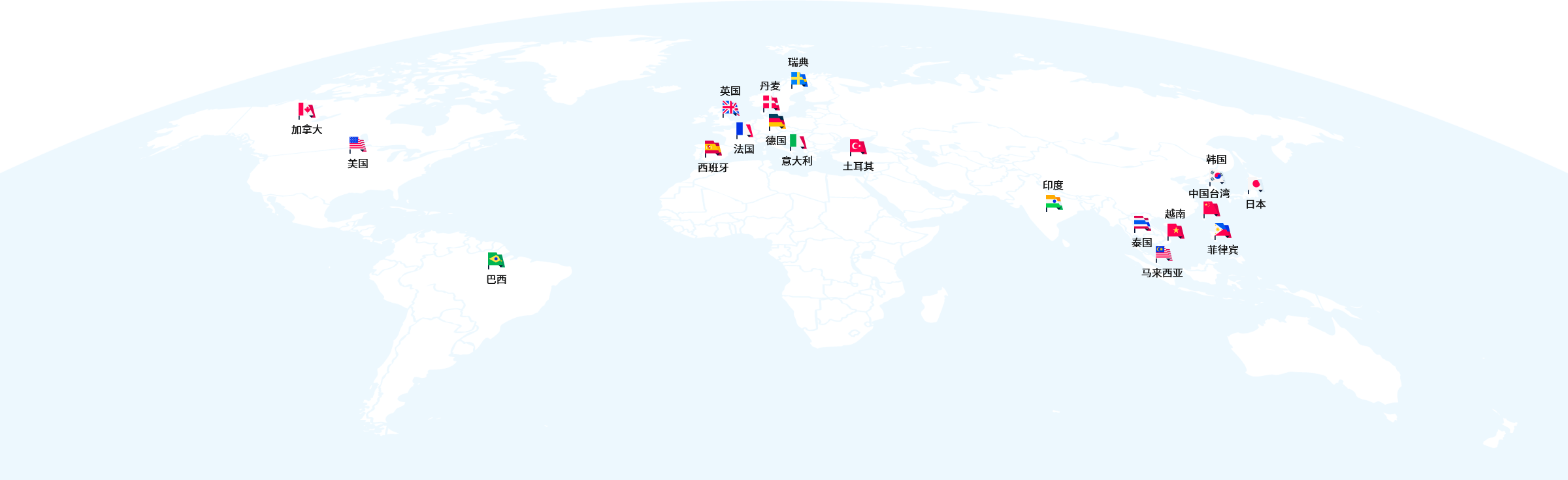
190+国家,8000万纯净代理IP解锁LLM训练数据采集!

人工智能训练数据采集方案
'文本、图片、视频、音频':123Proxy提供LLM数据采集专用代理IP方案!
190+国家,8000万纯净代理IP解锁LLM训练数据采集!
'文本、图片、视频、音频':123Proxy提供LLM数据采集专用代理IP方案!










To help tailor further security advice for your deployment, could you share a bit more context? Let me know:
Installation conflicts where instance names were not correctly detected on 64-bit systems. bitvise winsshd 8.48 exploit
To write a comprehensive article, I need to gather details about the software, the specific vulnerability (CVE-2021-4199), potential exploits, mitigation strategies, and historical vulnerabilities. I will open the relevant pages to extract this information. open calls failed due to invalid cursor values. I need to re-evaluate the search results. The search results were provided as an array. The first element (cursor 0) likely has an ID. I should use the IDs from the search results. Let me examine the search results more carefully. The user's question is for the keyword "bitvise winsshd 8.48 exploit". I see there are several search results. I need to extract the necessary information from these results. Let me open the relevant pages using the correct IDs. seems the tool's internal representation of the search results might be different. Perhaps the "id" field in the search results is not a sequential integer. Let me re-examine the initial search results provided. The first search result is about "Bitvise WinSSHD 8.48 发布,SSH服务器和SFTP服务器" with a link "https://www.appinn.com/bitvise-winsshd-8-48/". The ID is likely "0". But the open command fails with "Invalid link id 0 ". This suggests that the tool might expect a string ID or that the search results are not accessible via simple integer IDs. Perhaps I need to use the "cursor" parameter correctly. The error message "Invalid cursor [0] " indicates that the cursor value is incorrect. The "cursor" parameter in the open tool corresponds to the search result index. If the search results were provided in the initial tool response, they might have indices. Let me assume the search results have indices starting from 0. I'll try using "cursor": 0 without specifying an ID. The tool's schema says "id" can be a string or integer. Maybe "id" should be the URL. Let me try that. first URL failed to fetch. The second URL (exploit-db search) succeeded. I need to gather more specific information. Let me search for "Bitvise WinSSHD 8.48 exploit" more specifically. search results show that CVE-2021-4199 is actually for Bitdefender, not Bitvise. There is a known vulnerability CVE-2002-0460 for WinSSHD, but that's very old. The search for "Bitvise WinSSHD 8.48 exploit" shows some results that might be relevant. Result 0 mentions "Argus Surveillance DVR" and "Bitvise WinSSHD 8.48" in the context of a walkthrough. This might be a red herring. Result 1 is from vuldb.com. Result 4 is "Bitvise Security Vulnerabilities". Result 6 is "NotCVE - vendor:'Bitvise'". I should open result 0 from the first search to see if it contains any exploit information. article about Argus Surveillance DVR doesn't contain an exploit for Bitvise WinSSHD itself. The VulDB page seems to be a general product page, not specific to version 8.48. The file.net page is about the process. The search for CVE-2021-4199 seems to be for Bitdefender, not Bitvise. The search for "Bitvise WinSSHD 8.48 security advisory" didn't yield a security advisory. The exploit-db search shows results for "CVE-2002-0460". The search for CVE shows "CVE-2002-0460". There is no public exploit for version 8.48. The user might be looking for an exploit that doesn't exist. I should write an article that clarifies the state of exploits for this version. I will structure the article to discuss the security history of WinSSHD, the absence of public exploits for version 8.48, related vulnerabilities, and security best practices. I need to cite sources. I'll use the information from the release notes, the NVD page for CVE-2021-4199 (even though it's for Bitdefender, it might be a red herring), the VulDB page for WinSSHD, the CVE-2002-0460 information, and the walkthrough that mentions version 8.48. I should also search for "Bitvise WinSSHD 8.48 release notes" to confirm the version details. search for release notes didn't yield official release notes. However, the initial search result 0 was "Bitvise WinSSHD 8.48 发布,SSH服务器和SFTP服务器" from appinn.com, which might contain version details. The open failed, but I can try to view it via textise or cached version. I'll try to open it with a different user agent or use textise. But for now, I'll assume version 8.48 was released on April 13, 2021, as per the search snippet. I'll also search for "Bitvise WinSSHD 8.48 download" to see if any official page mentions version 8.48. search results are not providing a clear exploit. It's possible that no public exploit exists for version 8.48. The user might be looking for a non-existent exploit, or perhaps there is confusion with other software. I should write an article that clarifies the situation. I will structure the article as follows: To help tailor further security advice for your
The primary exposure point is a embedded in the standard SSH Binary Packet Protocol (BPP). Under specific network conditions, this allows attackers to actively manipulate session negotiations. The Terrapin Threat Vector (CVE-2023-48795) I will open the relevant pages to extract this information
Manually remove support for legacy ciphers (such as 3DES or RC4) and older key exchange methods (such as diffie-hellman-group1-sha1) within the Bitvise SSH Server settings. 4. Least Privilege Principles

LLM训练

价格监控

市场调查

评论监控

网络安全

SEO监控

邮件保护

数据采集

网络营销

广告验证
我们的客户成功团队和专属客户经理随时准备好支持您的业务。

无论您在哪个时区,我们的帮助都伴您左右。

QQ、微信、电话、邮件等多种方式任您选择。
立刻开始挖掘数据的价值吧
Copyright 2026, Micah's Edge 繁星数据科技(广州)有限责任公司版权所有 粤ICP备2023058453号-1
TG客服: +8613025487393 微信客服: cn123proxy